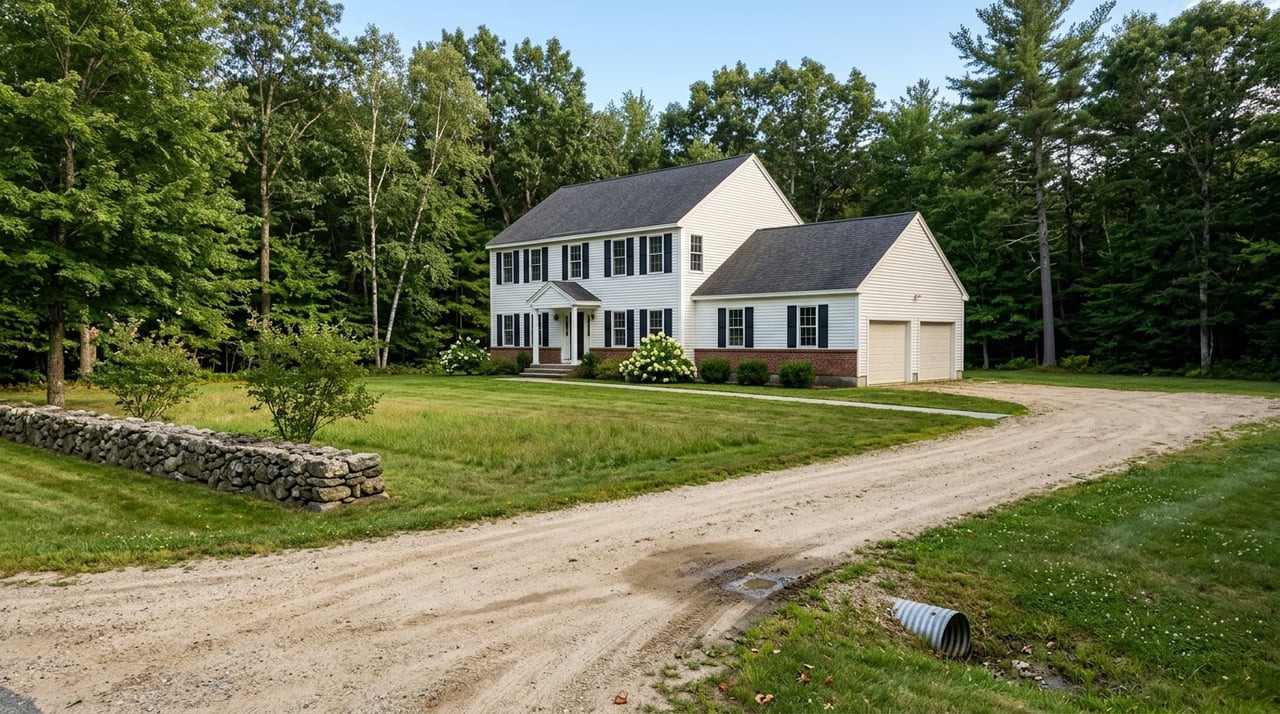
Buying Acreage in Greenfield Center: What to Review
July 2, 2026
July 2, 2026
Buying acreage sounds simple until you realize that ten acres on paper can feel very different from ten acres you can actually use. If you are looking at land in Greenfield Center, you are probably thinking about privacy, room to build, and long-term value, but you also want to avoid surprises after closing. This guide will help you understand the local checks that matter most so you can move forward with more confidence. Let’s dive in.
Greenfield Center is part of the Town of Greenfield, a rural town about five miles north of Saratoga Springs. The town covers more than 41,000 acres and is the largest town by square-mile area in Saratoga County. That rural setting is a big reason acreage here can be appealing, but it also means every parcel needs careful review.
With land, acreage alone does not tell the full story. A parcel’s value and usefulness often depend more on zoning, overlay districts, access, drainage, and utility feasibility than on raw size. In other words, the best acreage purchase is not always the biggest parcel. It is the one that fits your plans.
Before you focus on views, tree lines, or road frontage, confirm how the parcel is classified. The Town of Greenfield zoning code includes LDR, MDR1, MDR2, TC, OR, IM, and PR districts, along with overlay districts such as EME, FMWRC, KROD, and LDOD. Those labels can directly affect whether you can build, what approvals may be required, and how much of the land may be practical to use.
The official zoning map is part of the town code. If a district boundary is unclear, a town official interprets it, and that decision can be appealed to the Zoning Board of Appeals. That makes zoning verification one of the first and most important steps in any acreage search.
Single-family dwellings are principal permitted uses in LDR, MDR1, MDR2, TC, OR, and PR. They are not principal permitted uses in IM. If your main goal is to build a home, this is a key first filter.
If you also want room for agricultural use or personal farm activities, do not assume a parcel automatically fits that plan. The town treats those uses differently by district, so the exact zoning designation and approval path matter. That is especially important if you want a hobby farm, outbuildings, or another specialty use.
Lot size rules in Greenfield can change depending on both the zoning district and whether sewer is available. For single-family dwellings, the town’s area table shows:
This is one reason two parcels that look similar online can offer very different options in practice. A parcel may have enough acreage overall, but the zoning and utility setup can still limit what you can do.
Overlay districts deserve close attention because they can add rules on top of the base zoning. In Greenfield Center, that can be the difference between a straightforward purchase and a parcel that needs extra approvals or has meaningful building limits.
If any part of a parcel touches the Kayderosseras Ridge Overlay District, the entire parcel is treated as being in that district. In KROD, construction over 1,200 square feet requires Planning Board site plan approval. The district also sets an eight-acre minimum lot size per principal permitted use or dwelling unit.
For buyers, that means a parcel that seems large enough at first glance may still face tighter standards once KROD applies. If your goal is a larger home or multiple long-term use options, this review should happen early.
The Floodplain Management, Wetland Resource Conservation Overlay District applies to FEMA 100-year flood zones, a 500-foot conservation buffer, DEC wetlands, and federally regulated wetlands. The code places substantial restrictions on filling, grading, excavation, and construction in these areas.
The town code also states that land within 75 feet of DEC wetlands must remain in a natural vegetative state. Within 100 feet, a DEC permit is required for buildings, structures, subsurface drainage, or impervious surfaces. Even if a parcel has generous acreage, these features can shrink the practical buildable area.
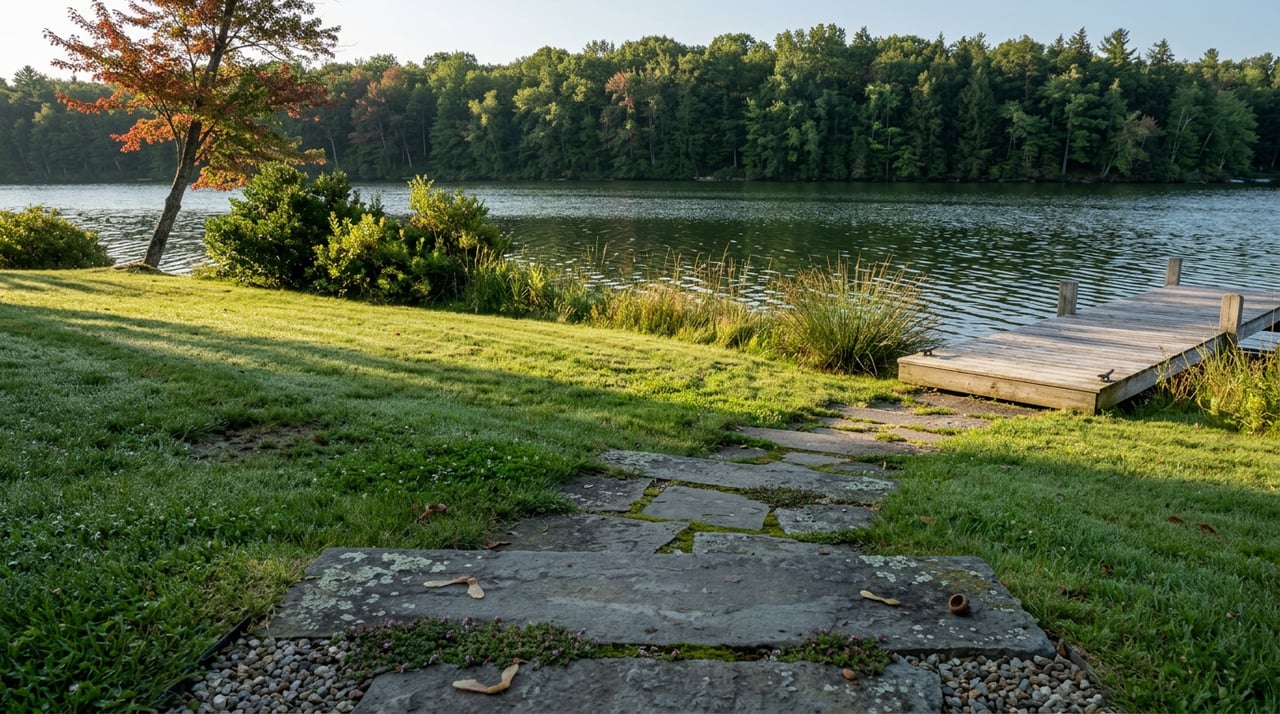
If a parcel falls within the Lake Desolation Overlay District, water quality protection rules come into play. The district requires public sewer where available, and private sewage systems must meet state and town standards and be verified by a professional engineer.
There is also a 150-foot setback from Lake Desolation and tributary streams for ground-discharge private sewage systems. If you are considering land in this area, septic planning is not something to leave until later.
Some buyers look at acreage for long-term flexibility, including possible earth or mineral extraction. In Greenfield, the EME overlay requires a special use permit for earth or mineral extraction and sets larger minimum lot-size and frontage standards than ordinary residential land.
If that kind of future use matters to you, make sure you confirm the rules before purchase. Specialty uses often depend on more than the base zoning district.
Rural land purchases often succeed or fail based on practical details. In Greenfield, the town’s building permit application itself gives you a good sense of what matters because it requires a plot or site plan showing existing and proposed buildings, drainage, utilities, wetlands, floodplains, wooded areas, sediment and erosion controls, and setback distances.
The application also asks for water supply and sewage details, including septic-related information and percolation data. That is a strong sign that soils, drainage, and utility feasibility are central to evaluating acreage in this area.
A separate driveway permit is required for driveways entering town roads. The town’s driveway form states that no new driveway may be approved where sight distance creates a hazard. It also says a certificate of occupancy will not be issued until the driveway is inspected and approved.
That makes access more than a convenience issue. Before closing, you will want confidence that the parcel can support a legal driveway with acceptable frontage and safe visibility.
The Town of Greenfield participates in an EPA-mandated MS4 stormwater program aimed at keeping pollutants and erosion out of storm sewers, ditches, streams, and lakes. For acreage buyers, that is a reminder to think carefully about grading, clearing, runoff control, and exposed soils from the start.
This matters even more on sloped parcels or heavily wooded land. A beautiful site can still require added planning if runoff, erosion, or disturbance becomes a concern.
If a parcel is not served by public water, verify the water-source plan early. Saratoga County says its Department of Health operates under New York State sanitary code to protect public drinking water and provides technical assistance for private drinking water sources such as wells, ponds, and springs.
For rural acreage, that makes water verification a basic step, not an optional one. If you are comparing parcels, the difference between an easy water solution and a complicated one can affect both cost and timeline.
When you buy acreage in Greenfield Center, your due diligence should be practical and parcel-specific. These are some of the most important questions to work through before you commit:
Saratoga County notes that its assessment database includes tax maps, photos, assessment data, and comparable-sales tools. County record systems also make deeds, liens, mortgages, and survey maps available. Those records can help you confirm what you are really buying.
It is easy to compare land by price per acre, but that shortcut can be misleading. New York State explains that assessors typically use the market approach for residential, vacant, and farm properties, and that vacant land with no current use is assessed at highest and best use.
State assessment guidance also tracks land by factors such as frontage, depth, acres, waterfront, rear land without public-road access, wetlands, and other land types. In practical terms, two Greenfield Center parcels with the same acreage can have very different values because one may offer better buildability, access, utilities, or fewer overlay constraints.
That is why smart land buyers look beyond the listing headline. The real question is not just how many acres you get. It is how well those acres support your goals.
If you are serious about buying land here, start with the parcel basics before you get emotionally attached. Confirm the zoning district, identify any overlays, review access and driveway feasibility, and investigate water and septic options as early as possible.
That approach protects your time, your budget, and your plans. In a market like Greenfield Center, careful due diligence is not overthinking. It is how you buy acreage with clarity and confidence.
If you want help evaluating land in Greenfield Center or anywhere in Saratoga County, Shayna Lynne Goodson can help you sort through the details, move quickly on the right opportunity, and make your next step feel a lot more straightforward.
Stay up to date on the latest real estate trends.
Dedicated to both technology and innovation, The Shayna Goodson Team comprises a group of highly specialized real estate professionals who are poised to provide you with tailored solutions to achieve your objectives, whether you're in the market to buy or sell. Our team is known for its unwavering commitment and determination, aiming to become your lifelong, trusted partners in real estate expertise.